


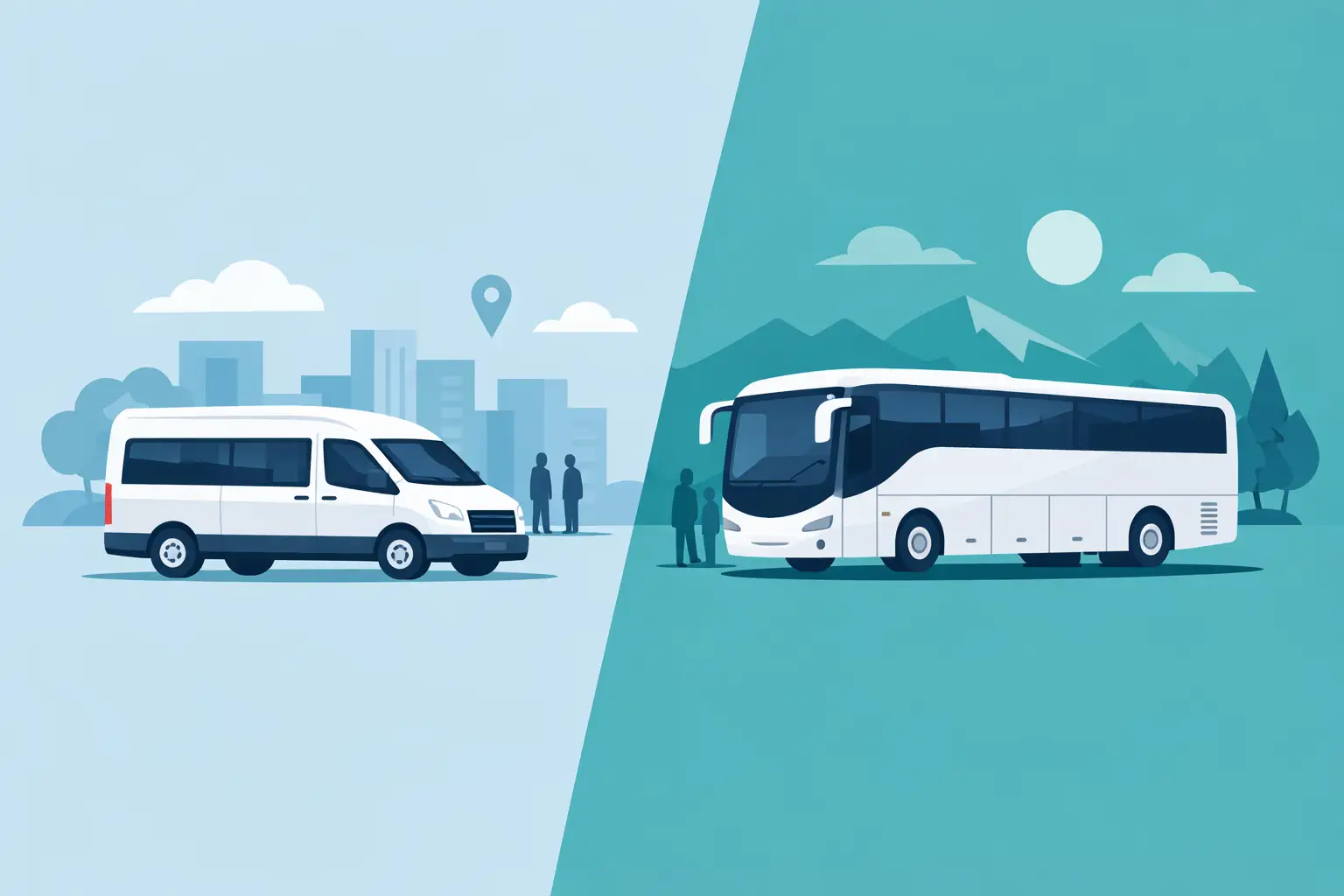
If you are moving a group, the wrong vehicle choice shows up quickly. People feel cramped, luggage becomes a headache, boarding takes too long, or you end up paying for seats you never needed. That is why minibus hire versus coach hire is not a small detail. It affects budget, comfort, timing and how smoothly the day runs.
For planners, schools, wedding organisers and corporate teams, the best option usually comes down to numbers, trip length and how structured the day will be. A smaller vehicle can be faster and more flexible. A larger coach can make a long journey far more comfortable and efficient. The trick is matching the vehicle to the job, not simply booking the biggest or cheapest option available.
Minibus hire versus coach hire: what is the real difference?
At a basic level, a minibus is built for smaller groups and a coach is designed for larger movements of people over greater distances or with higher comfort expectations. That sounds simple enough, but in practice there is more to weigh up.
A minibus often suits groups that want easier access, quicker loading and a more compact transport solution. It can be ideal when the route includes tighter streets, multiple pick-ups or a group size that does not justify a full-size coach. For short to medium trips, that can be a practical and cost-effective fit.
A coach, on the other hand, is generally the better choice when passenger numbers climb, the journey is longer, or comfort matters more. More seating, more luggage space and a roomier interior can make a major difference when people are travelling for several hours or moving as part of a formal event schedule.
So, minibus hire versus coach hire is less about which vehicle is better overall and more about which one is better for the way your group will travel.
When a minibus makes more sense
A minibus tends to work best when the group is small enough to stay together comfortably without needing excess capacity. That makes it a strong option for private groups, team outings, smaller wedding parties, school groups split across activities, or staff transport where the headcount is known and manageable.
One of the biggest advantages is manoeuvrability. If your pick-up point is at a venue with limited access, narrow approach roads or a busy urban drop-off zone, a minibus can often move in and out more easily than a full coach. That can save time and reduce the stress of coordinating arrivals.
There is also the question of cost. Hiring a vehicle that closely matches your group size is usually more efficient than paying for a larger coach with many empty seats. For shorter trips especially, a minibus can strike the right balance between comfort and value.
That said, there are limits. If your group is carrying bulky equipment, formalwear, presentation materials or overnight bags, a smaller vehicle can feel full very quickly. A minibus may also be less comfortable than a coach on longer journeys, particularly if passengers are on board for several hours.
When coach hire is the smarter call
Coach hire becomes the stronger option when capacity, comfort and coordination matter most. Larger wedding guest transfers, conference transport, school excursions, sports groups and touring parties often benefit from keeping more people together in one vehicle rather than splitting them across several smaller ones.
There is a practical reason for that beyond comfort. One vehicle means one departure time, one arrival point and fewer moving parts to manage. If you are working to a tight event schedule, reducing complexity matters. It lowers the chance of delays, missed instructions or one section of the group turning up late.
Comfort is another major factor. On longer journeys, passengers usually appreciate the extra room a coach provides. People can settle in properly, the ride tends to feel less cramped, and there is generally more space for bags and day gear. If the journey is a significant part of the day, not just a quick transfer, those details count.
A coach can also present a more polished option for corporate groups or formal events. When guests, delegates or VIP attendees are involved, the vehicle is part of the overall experience. Reliable timing matters most, but presentation and comfort are not far behind.
Group size is only the starting point
Many people choose between a minibus and a coach based on headcount alone. That is understandable, but it is not always enough. Two groups of the same size can have very different transport needs.
A group of 18 travelling 20 minutes to a local venue may be perfectly suited to a minibus. A group of 18 travelling half a day with luggage, equipment and fixed arrival times may be better off in a coach. The numbers have not changed, but the trip profile has.
The same goes for larger groups. Sometimes a single coach is the obvious answer. Other times, two smaller vehicles can offer better flexibility if passengers are arriving from different points or following different schedules. Good transport planning looks at the whole movement, not just the seat count.
Cost, value and the trap of booking too small
Budget matters, and no organiser wants to overspend. But choosing the cheapest vehicle on paper can create avoidable problems on the day. If people are squeezed in, bags do not fit, or extra runs become necessary, the original saving can disappear fast.
Value comes from fit. A well-sized vehicle that keeps the group comfortable, on time and easy to coordinate is usually the better decision than a cheaper option that adds pressure. This is especially true for weddings, school movements and business events where timing is not flexible.
There is also a hidden cost in poor logistics. If your transport plan creates confusion or delays, it affects the wider event. Suppliers wait, schedules shift and organisers end up solving problems they did not need to have. That is where experience and proper vehicle matching make a real difference.
Comfort and safety should not be afterthoughts
Comfort is not only about making the ride pleasant. It also affects how passengers arrive. If people step off the vehicle tired, cramped or flustered, that can shape the whole event, whether it is a school day out, a corporate function or a private celebration.
Safety is even more straightforward. Group transport should be planned with trained drivers, properly maintained vehicles and a clear understanding of route, timing and passenger needs. A smaller vehicle is not automatically safer, and a larger one is not automatically harder to manage. The quality of the operator and the planning behind the job matter more.
That is why the conversation should not stop at minibus hire versus coach hire. The better question is whether the provider is taking the time to understand your day properly. Good operators ask about numbers, luggage, venue access, timing windows and any special requirements before recommending a vehicle.
Choosing the right option for your event
If your priority is flexibility, easy access and a cost-effective fit for a smaller group, a minibus is often the sensible choice. If your priority is moving a larger group comfortably and keeping logistics tight, a coach usually comes out ahead.
For some bookings, the answer is obvious. For others, it depends on the route, the duration and what passengers need to bring with them. That is why a quote-led approach tends to work better than guessing. A transport provider with real charter experience can spot issues early and guide you towards the vehicle that suits the job, not just the booking form.
For customers in places such as Christchurch, Auckland or Queenstown, that local planning knowledge can be especially useful when venue access, road conditions or event timing add pressure to the day. A dependable operator should help simplify those details rather than leave you to figure them out alone.
Kea Coachlines works with groups of different sizes every day, and the pattern is usually the same. The right vehicle is the one that makes the day feel easier from the first pick-up to the final drop-off.
If you are deciding between a minibus and a coach, think beyond seats. Think about how you want the day to run, how your passengers need to travel, and what could go wrong if the fit is off. Get that part right and everything else tends to move far more smoothly.